


Safety Culture
We regard patient and staff safety as a vital part of our institutional culture and minimise risks.
As DOC Oral and Dental Health Clinic, we keep patient and staff safety at the highest level and continuously improve our service quality with scientific and transparent approaches.
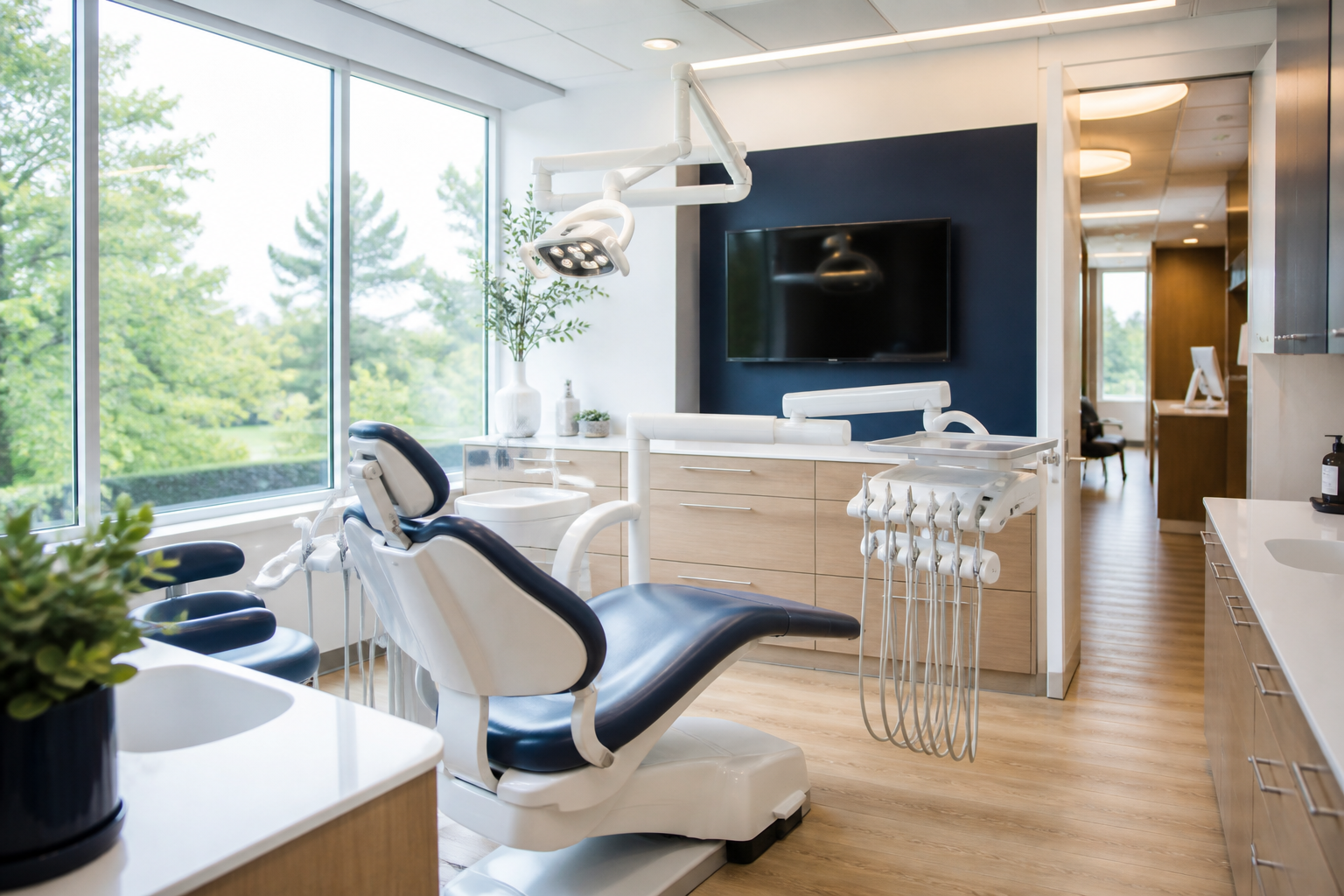
This is the quality policy of the Private DOC Oral and Dental Health Clinic, which provides oral and dental health services while prioritising patient satisfaction. We ensure that patient satisfaction is prioritised by fulfilling the following conditions.
Our fundamental principles that shape our institutional culture.
We regard patient and staff safety as a vital part of our institutional culture and minimise risks.
In all our processes, we always remain committed to professional and universal ethical values and never compromise on honesty.
In all our services, we adopt a fair, egalitarian, unbiased and science-based approach.
We work with a strong team spirit and consider patient and staff satisfaction to be our common goal.
Respecting sustainable practices, we provide environmentally conscious waste and resource management.
By making a difference with a contemporary approach, we are always effective, transparent, reliable and open to continuous development.
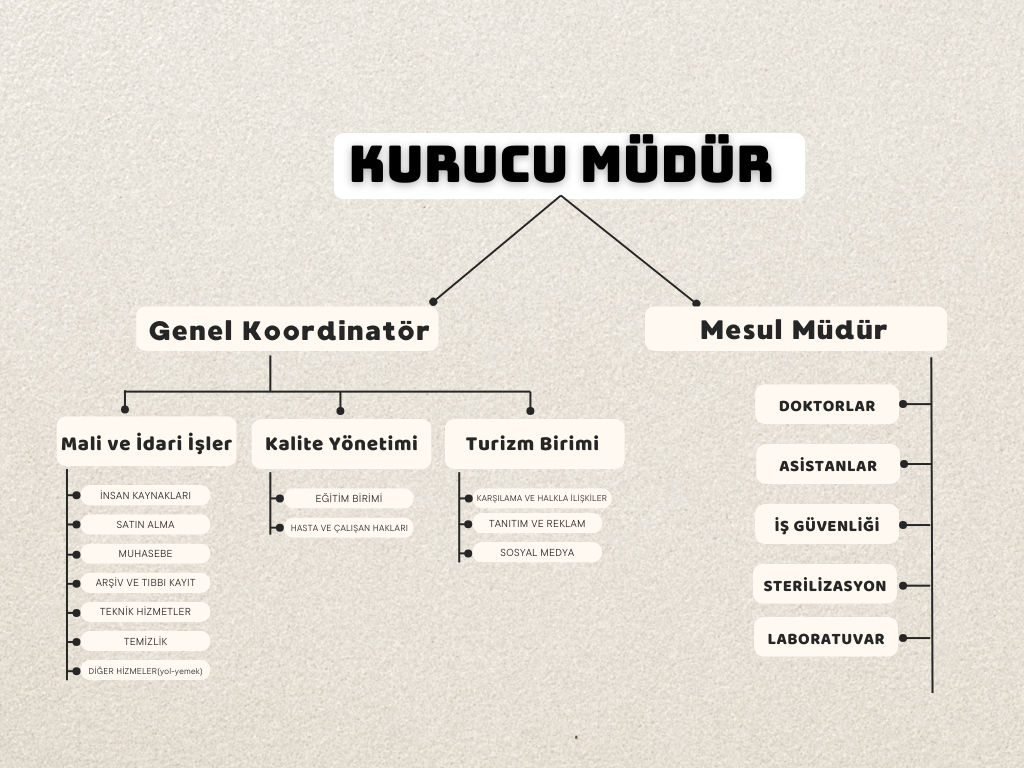
Our management structure is built on a clear chain of responsibility, under the leadership of the founding director, with the general coordinator and responsible director lines.
The quality, administrative and clinical units work together within the same hierarchy. Patient safety and continuity of service are secured through this structure.
It has been prepared to define the professional conduct standards of all staff working at the clinic, to protect patient rights and to create a reliable, respectful working environment.
Patients are treated with kindness, respect and fairness. Information is kept confidential within the legal framework, and clear and accurate information enables them to make informed decisions.
Full compliance with legal regulations and scientific facts is ensured. The patient's priority needs are observed, and unnecessary or unethical practices are avoided.
Cooperation among staff is essential. Any kind of discrimination is strictly prohibited, and professionalism is maintained in the working environment.
Staff avoid conflicts of interest. No financial gain, gift or advantage is accepted from patients or suppliers.
Patient files and treatment reports are prepared completely, and data is shared only in accordance with legal and ethical requirements.
Services that improve public health are provided; environmentally friendly practices are adopted and meticulous waste management is carried out.
Patients are given clear information about treatment processes, pricing and possible outcomes. Each member of staff is responsible for their own actions and decisions.
In the event of a violation of the code of ethics, disciplinary processes are initiated according to the nature of the incident; violations are evaluated by the management or the ethics committee and, if necessary, legal action is taken.
The code of ethics is reviewed regularly and, taking staff feedback into account, is updated when necessary. Each member of staff undertakes in writing that they accept the rules.
The fundamental legal and professional rights of our team in a contemporary understanding of health care.
Because medical science develops rapidly, health workers must be trained with an effective, high-quality and continuously self-renewing approach to education. Refreshing their knowledge through in-service training, conferences and seminars is one of their most basic rights.
Using current developments and technologies in diagnosis and treatment is the most natural right of the worker.
Physicians and health personnel are obliged to provide service while adhering to ethical principles with the sensitivity their profession requires, and they demand to work in this manner.
Political, social or physical pressure during the practice of the profession conflicts with the nature of the profession. Workers are entitled to provide service without being placed under pressure.
Except in cases of urgent duty, a service that conflicts with one's fundamental values and conscientious convictions cannot be demanded.
The health worker has the right to demand to work under safe conditions in which risks are minimised.
Considering the profession's training period, hardship and risks, the services provided must be paid for with justice and fairness.
They have the right to take part in the institutions where they work and in professional administrative processes, or to express their opinion on health-related legislation.
Because of professional confidentiality, physicians may refrain from giving testimony in accordance with legal regulations (CMK m. 46).
There is the right to demand the operation of safe ambulance and referral systems in emergencies.
In disaster situations, all patients must be attended to. Apart from official or humanitarian duty, the physician's right not to treat a patient for professional and personal reasons is reserved.
The physician has the right to request a consultation or advice whenever they need it.
The physician makes the diagnosis and applies the treatment in accordance with scientific requirements; however, there is no obligation to guarantee full recovery (TDT 13. m).
The physician needs sufficient time to give their patient the necessary care. It is generally accepted that a physician should allocate at least 20 minutes to their patient.
If there is more than one method, the physician is free to choose whichever they wish; they should prefer the most well-known method with proven reliability.
Physicians are obliged to respect their patients' health, personality and the rights arising from domestic and international law. Physicians are expected to have the knowledge and experience required by the medical profession, to exercise adequate care and attention while practising their profession, and to act in accordance with legal and ethical rules.
For a medical intervention to be lawful, informed consent must be obtained, appropriate and adequate conditions must be provided, a valid medical method must be chosen and all medical interventions must be recorded. Medical records and confidentiality are a legal necessity both for following up the patient's treatment and for judicial processes.
Aim: To improve the experience of patients who come to the clinic.
Aim: To increase the acquisition of new patients.
Aim: To digitalise and speed up operations.
Aim: To ensure that the clinic is known as a respected institution in its field.
Aim: To increase the diversity and number of patients.
Aim: To prepare the infrastructure for growth.
Aim: To increase the clinic's regional presence.
Aim: To expand services and establish a larger centre.
Aim: To become a socially accepted institution.
The risk management process covering all clinical, administrative and support processes of the clinic is carried out systematically.
| # | Category | Risk Description | Level | Control Measures | Responsible |
|---|---|---|---|---|---|
| 1 | Clinical | Risk of infection due to lack of sterilisation | 5 | Regular checks of sterilisation devices, training programmes, weekly hygiene inspection | Clinical hygiene team |
| 2 | Patient Safety | Administration of incorrect treatment | 5 | Regular checking of patient files, a double-check system, strengthening physician-patient communication | Treatment planning team |
| 3 | Administrative | Loss of reputation due to patient dissatisfaction | 2 | Regular analysis of survey results, improvement of the complaint management process | Patient rights team |
| 4 | Technological | Crash of the digital patient record system | 5 | Regular backups, the IT team being prepared for possible failures | IT support team |
| 5 | Financial | Incorrect collection of treatment fees | 4 | Updating automatic payment systems, accounting audits | Finance department |
| 6 | Staff | Injury of staff by sharp instruments | 1 | Safe storage of sharp instruments, protective equipment, occupational health and safety training | Occupational Health and Safety Committee |
| 7 | Legal | Legal proceedings arising from patient complaints | 5 | Correct completion of patient information forms, recording of all procedures | Legal and management team |
| 8 | Environmental | Disruption of treatment due to power outage | 2 | Use of a generator, establishment of an emergency plan | Technical team |
| 9 | Emergency | Outbreak of fire | 5 | Checking of fire detectors and extinguishers, regular fire drills | Emergency team |
| 10 | Training | Staff being unable to learn new treatment methods | 6 | Making annual training plans, allocating a budget to training programmes | Training coordinator |
Low risk (1–5) · Medium risk (6–10) · High risk (11–15) · Critical risk (16–25). The risk register is reviewed once a year.
Staff are ensured training on the environment, energy, natural resources, air emissions, and financial and economic matters, and these issues are adopted as company policy.
In this way, we contribute to a cleaner, more prosperous and lasting future and to a more conscious society.