

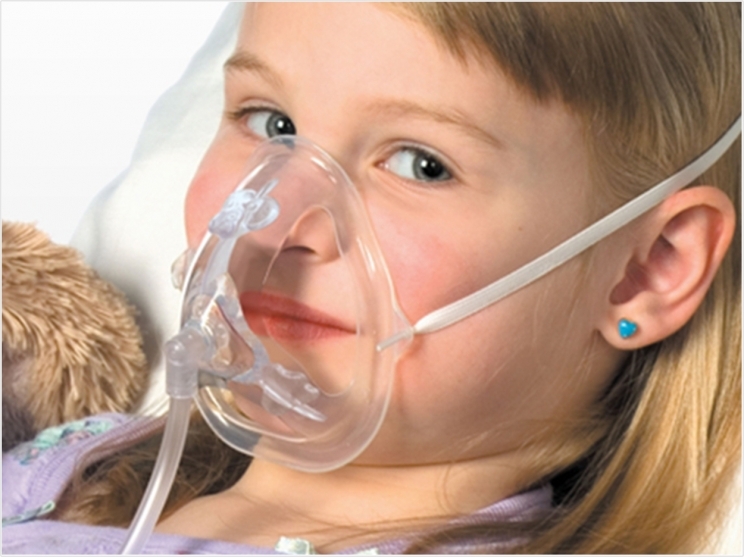
Dental treatments under general anaesthesia
What is dental treatment under general anaesthesia?
Dental treatment under general anaesthesia is the carrying out of dental treatments while the patient is put to sleep in a fully equipped hospital setting under the control of a specialist anaesthetist, and woken in a controlled way when the procedure is finished. Thanks to this method, all dental procedures that would be difficult under normal conditions or that cause the patient anxiety are turned into a completely painless, safe and comfortable process of which nothing is remembered.
Who is it suitable for?
This treatment method is the most suitable and safest option for many patient groups who have difficulty receiving treatment in a standard dental chair or who need extensive procedures:
- Adults with a very intense fear of the dentist (dental phobia) and anxiety,
- Children and adults with mental and physical disabilities,
- Children too young for communication or to be treated in the dental chair by persuasion,
- Patients with a very sensitive stomach and a very strong nausea and gag reflex,
- Individuals allergic to the contents of local anaesthetic,
- Situations in which local anaesthesia alone cannot provide adequate numbness (analgesia), for example because of advanced infection,
- Patients who will undergo large-scale surgery such as bone-cyst operations or bone-graft (powder) applications,
- Adult patients who prefer that several procedures which cannot be completed in a single session under local anaesthesia be finished in one go in a short time such as 2-4 hours.
How does treatment proceed?
- Pre-assessment and tests: Before the procedure the patient’s general health is assessed by the anaesthetist, necessary blood tests are done and approval of fitness for anaesthesia is obtained.
- Planning: The dentist plans all procedures to be carried out and, together with the anaesthetist, determines the approximate operating time.
- Sleep and treatment: In the operating theatre the anaesthetist puts the patient to sleep. The dentist then carries out all planned surgical and restorative (filling, root canal) procedures in a single session.
- Waking: At the end of treatment the patient is woken safely and in a controlled way by the anaesthesia team. They are taken to a recovery room and observed for a short time.
Points to consider before treatment
- Blood tests and investigations requested by the anaesthetist before the operation must be completed in full.
- Under general-anaesthesia rules, eating and drinking must be stopped completely for the period your doctor will specify (generally the last 6-8 hours before the operation).
- If systemic medicines (blood pressure, diabetes, etc.) are used regularly, the dentists must be told in advance.
Points to consider after treatment
- Same-day discharge: After resting in hospital for a while after treatment, the patient is discharged the same day.
- Rest: After leaving hospital, a car should not be driven that day, strenuous work should be avoided and rest should be taken at home.
- Return to daily life: Because the effect of anaesthesia leaves the body quickly, patients can generally continue their routine life without problems the very next day.
- The special prescription and dietary advice given by the dentist according to the type of dental treatments carried out (extraction, implant, etc.) should be followed.
No. After dental treatments under general anaesthesia, patients rest in an observation room for a while and are discharged from hospital safely the same day.
Yes, because it is applied in a fully equipped hospital setting, under specialist anaesthetists and after detailed preliminary tests, it is an extremely safe method.
Yes. One of the greatest advantages of this method is that a large number of extractions, fillings, root canal treatments and implants that could take weeks or months under normal conditions can be fully finished in a single session in a short time such as 2-4 hours.